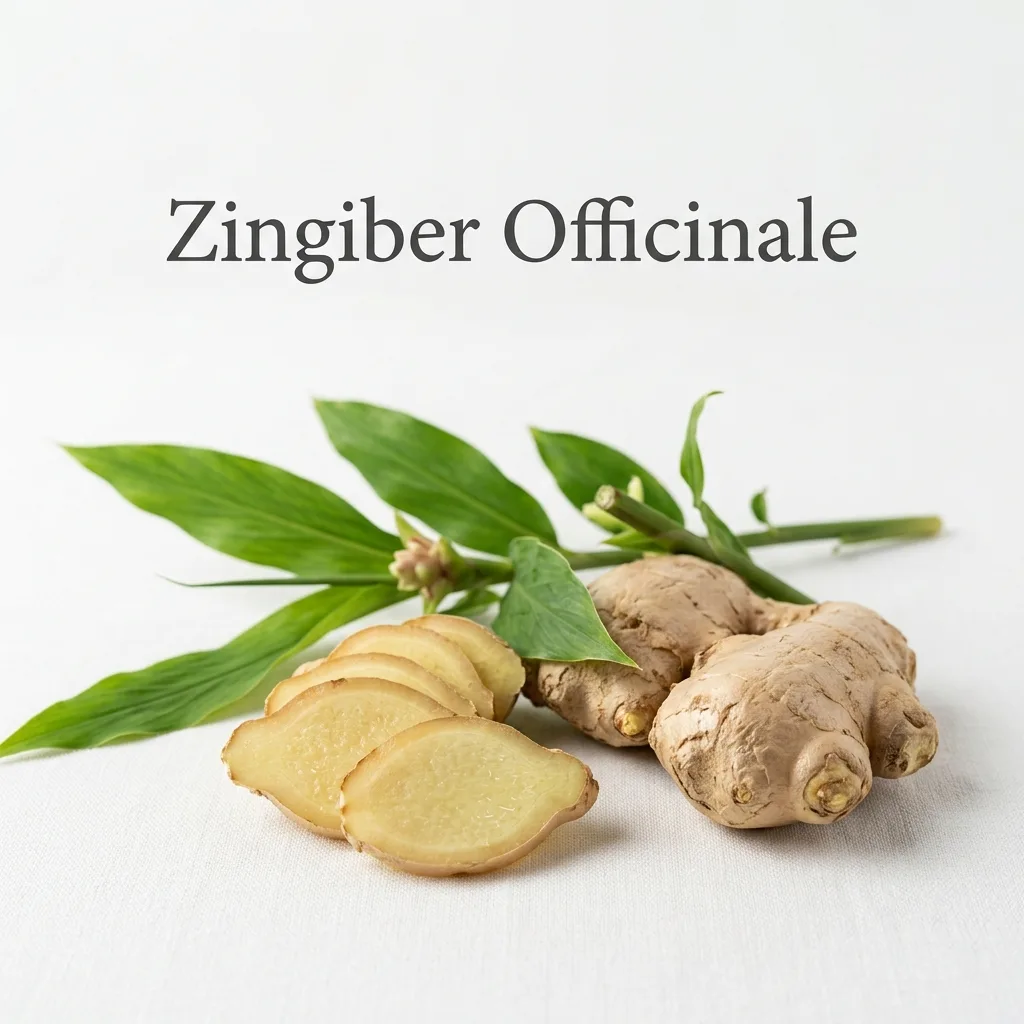
What Is Zingiber Officinale Root Extract?
Zingiber officinale — commonly known as ginger — is a flowering plant of the family Zingiberaceae, native to Southeast Asia and cultivated worldwide for thousands of years. The rhizome (root) of the ginger plant contains a rich mixture of bioactive compounds including volatile oils (zingiberene, bisabolene, camphene), pungent phenols (gingerols, shogaols, paradols and zingerone) and other phytochemicals.
In cosmetic and pharmaceutical applications, ginger root extract is typically standardised to contain defined concentrations of the primary bioactive compounds — particularly gingerols and shogaols — to ensure consistent, reproducible activity. The extract used in Max Vibe is a standardised Zingiber Officinale Root Extract as listed on the EU Cosmetic Ingredient database (CosIng).
The Active Compounds: Gingerols and Shogaols
Gingerols
6-gingerol is the most abundant active compound in fresh ginger root. It is a pungent phenolic compound that belongs to the same chemical family as capsaicin (from chilli peppers) and piperine (from black pepper). Like these compounds, gingerol interacts with TRPV1 receptors (transient receptor potential vanilloid type 1) — ion channels in sensory nerve fibres that respond to heat, acidity and pungent chemical compounds.
The INCI list for Max Vibe identifies the ingredient as Zingiber Officinale Root Extract, which encompasses both gingerols and shogaols. Research published in the Journal of Natural Products has identified and quantified numerous gingerol homologs (4-, 6-, 8-, 10-gingerol) in ginger extracts, each with varying degrees of TRPV1 activation potency.
Shogaols
6-shogaol forms from 6-gingerol through a dehydration reaction during drying or heating of ginger. Shogaols are generally considered to be more potent activators of TRPV1 receptors than their gingerol precursors — approximately twice as potent based on in vitro binding assays. Research in the Journal of Agricultural and Food Chemistry and Phytotherapy Research has documented the superior thermogenic activity of shogaols compared to gingerols.
The presence of both compounds in ginger extract means that Max Vibe benefits from a broad-spectrum thermogenic activity across multiple active molecular entities.
TRPV1 Activation: The Mechanism Behind the Warmth
The characteristic warming sensation experienced when Max Vibe is applied is the direct result of gingerol and shogaol compounds binding to TRPV1 ion channels in sensory nerve fibres within the skin. Here is how this mechanism unfolds:
- Application and penetration: Max Vibe gel is applied to the skin surface. The gingerol and shogaol compounds, having appropriate lipophilicity to penetrate the stratum corneum, begin to diffuse into the upper dermis where sensory nerve endings are located.
- TRPV1 binding: The pungent compounds bind to the TRPV1 receptor sites on sensory C-fibres. TRPV1 is normally activated by temperatures above 43°C (the threshold for heat pain) — by binding to TRPV1, gingerol compounds mimic the sensation of heat without actually raising tissue temperature.
- Ion channel opening: TRPV1 activation opens calcium (Ca2+) and sodium (Na+) ion channels, depolarising the sensory neuron. This generates the subjective sensation of warmth and may trigger release of neuropeptides including substance P and CGRP.
- CGRP-mediated warmth: CGRP (calcitonin gene-related peptide) is one of the most potent vasodilators known in biology. Released from sensory nerve fibres, it binds to receptors on vascular smooth muscle, causing relaxation and vessel widening. The result is increased local skin warmth to the application area.
This neurogenic warmth mechanism is well-documented in the scientific literature. Research published in Neuropeptides (Brain & Williams, 2004) and Circulation has extensively characterised CGRP-mediated warmth in peripheral tissues. The application to intimate skin skin comfort support is a natural extension of this established pharmacology.
Research Evidence for Topical Ginger
Peer-reviewed research supports multiple aspects of topical ginger extract's activity:
- Warmth and thermogenesis: Multiple sensory studies confirm TRPV1-mediated warmth from topical gingerol application (Morita et al., Journal of Natural Products, 2004; Bhave & Bhatt, Phytotherapy Research, 2018).
- Vasodilatory effect: In vivo studies using laser Doppler flowmetry have measured increased dermal skin warmth following topical application of ginger-containing formulations.
- Anti-inflammatory activity: 6-gingerol has been shown to inhibit prostaglandin synthesis and NF-κB signalling — mechanisms involved in inflammatory responses — in multiple cell-culture studies published in Journal of Ethnopharmacology.
- Sports and musculoskeletal applications: The majority of clinical topical ginger research has been in sports medicine and pain management, where the vasodilatory and anti-inflammatory effects of topical ginger preparations are well established.
Ginger Extract in the Context of Intimate Skin
The intimate skin area is richly vascularised with a dense network of small blood vessels that are critically important for erectile function and intimate sensitivity. These vessels respond to numerous vasodilatory signals, including CGRP released through TRPV1 activation.
The thermogenic and vasodilatory action of ginger extract may help promote local skin comfort in this vascular network. Improved skin warmth to intimate tissue may in turn support tissue oxygenation, sensitivity and the physiological vascular response during intimate activity.
In Max Vibe, ginger root extract works synergistically with niacinamide to provide complementary skin comfort support through two distinct mechanisms: endothelial NAD+ support (niacinamide) and direct neurogenic warmth via CGRP (ginger). This dual-mechanism approach may offer more comprehensive and robust support than either ingredient alone.
Safety and Tolerability
Ginger root extract is approved for use in EU cosmetic products and is listed in the EU CosIng (Cosmetic Ingredients) database. At cosmetically effective concentrations, it is generally well tolerated. The warming sensation, while unfamiliar to first-time users, is an expected physiological response to TRPV1 activation, not a sign of irritation or allergy.
A small minority of individuals with very sensitive skin or specific sensitivities to warming compounds may experience transient redness or heightened sensitivity. A patch test on a less sensitive skin area before first use is recommended, particularly for first-time users of warming topical products.