What Is Topical Delivery and Why Does It Matter?
The most important thing to understand about Max Vibe is that it is a topical intimate gel for men — meaning it works by delivering active ingredients through the skin surface, directly at the site of application. This is fundamentally different from taking an oral supplement or pill, which must be digested, absorbed through the intestinal wall and processed by the liver before entering systemic circulation.
Topical delivery offers several practical advantages for intimate wellness applications. First, it provides localised concentration — the active ingredients work at the site where they are most needed, rather than being distributed throughout the entire body. Second, it avoids first-pass hepatic metabolism, the process by which the liver breaks down many active compounds before they can reach target tissues. Third, topical products tend to have a faster onset of localised effect because they do not need to travel through the gastrointestinal tract.
The skin of the intimate area is highly vascularised (richly supplied with blood vessels) and has a relatively permeable stratum corneum compared to other body areas. This makes it an effective site for topical ingredient delivery. Research published in the Journal of Drug Delivery Science and Technology has documented the enhanced transdermal permeability of genital skin, supporting the rationale for intimate-area topical formulations.
How Each Active Ingredient Works
Niacinamide — Skin comfort and Skin Barrier Support
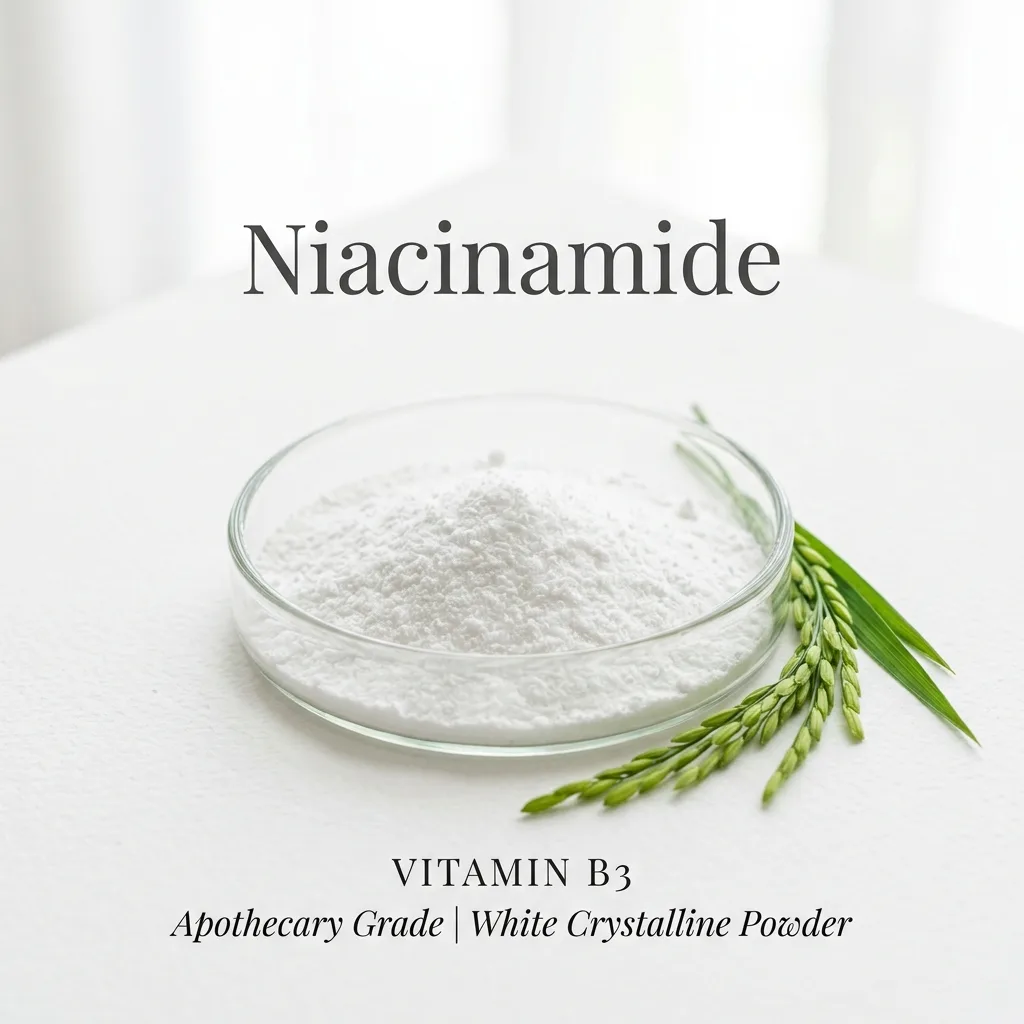
Niacinamide (vitamin B3) is one of the most widely researched topical skincare actives. At the cellular level, it acts as a precursor to NAD+ (nicotinamide adenine dinucleotide), a coenzyme essential for cellular energy metabolism. In topical application, niacinamide has been documented in peer-reviewed literature to:
- Support the synthesis of ceramides and other skin barrier lipids, strengthening the epidermal barrier
- Reduce transepidermal water loss (TEWL), helping to maintain tissue hydration
- Improve local skin comfort by supporting nitric oxide signalling pathways in vascular smooth muscle
- Exhibit anti-inflammatory properties that may reduce local tissue redness and irritation
In the context of intimate skin, improved skin comfort means better oxygen and nutrient delivery to local tissue — a mechanism that underlies the gel's potential to support sensitivity and vascular response. Multiple studies in the dermatological literature (including work published in Dermatologic Therapy and International Journal of Dermatology) confirm niacinamide's beneficial effects on skin skin warmth.
Zingiber Officinale Root Extract — Thermogenesis and Warmth
Ginger root extract from Zingiber officinale contains a complex mixture of bioactive compounds, most notably gingerols (in fresh ginger) and shogaols (formed when ginger is dried or heated). These compounds interact with TRPV1 receptors (transient receptor potential vanilloid type 1) — the same receptor system activated by capsaicin from chilli peppers — to produce a characteristic warming or heating sensation.
Beyond the sensory effect, activation of TRPV1 receptors in skin tissue can stimulate local warmth — the widening of blood vessels. This increases skin warmth to the area, delivering oxygen, nutrients and warmth. The thermogenic effect of topical ginger extract has been studied in the context of sports medicine and musculoskeletal applications, with a growing body of research exploring its use in intimate health topical formulations.
Research from the Journal of Ethnopharmacology and Phytotherapy Research documents the vasodilatory and thermogenic properties of gingerol compounds. The warming sensation most users notice within minutes of applying Max Vibe is a direct result of this ginger-TRPV1 interaction.
Paullinia Cupana Seed Extract — Natural Caffeine and Toning Effect
Guarana (Paullinia cupana) is a plant native to the Amazon basin. Its seeds contain one of the highest concentrations of naturally occurring caffeine found in any plant — typically 4–6% caffeine content, compared to approximately 1–2% in coffee beans. Guarana seeds also contain theobromine, theophylline and a range of tannins.
Topically applied caffeine has been studied primarily in the context of cellulite treatment and cosmetic tonification. The proposed mechanism involves inhibition of phosphodiesterase enzymes, which leads to increased intracellular cyclic AMP (cAMP). This cAMP elevation promotes lipolysis in adipocytes and may stimulate smooth muscle tone in superficial tissue, contributing to a local firming and toning sensation.
In the context of intimate skin application, the toning and stimulating properties of guarana extract may contribute to improved local sensitivity and tissue responsiveness. The tannins in guarana also provide mild astringent properties, which can contribute to the sensation of improved firmness.
Sodium Hyaluronate — Deep Hydration and Tissue Optimisation
Sodium hyaluronate is the sodium salt form of hyaluronic acid. Compared to hyaluronic acid itself, sodium hyaluronate has a lower molecular weight that enables better skin penetration. Hyaluronic acid is a naturally occurring glycosaminoglycan found throughout the human body, with particularly high concentrations in skin, connective tissue and the vitreous humour of the eye.
The most remarkable property of sodium hyaluronate is its capacity to bind water — a single molecule can bind up to 1,000 times its weight in water. When applied topically, it draws moisture from the environment and from deeper skin layers into the stratum corneum, creating a reservoir of hydration that improves tissue suppleness and elasticity.
In intimate skin applications, well-hydrated tissue responds more sensitively to touch and has greater mechanical flexibility. Sodium hyaluronate also supports the environment in which the other active ingredients — niacinamide, ginger and guarana — can deliver their effects more consistently.
Tocopherol — Antioxidant Protection
Tocopherol (vitamin E) is a fat-soluble antioxidant that integrates into cell membranes and protects polyunsaturated fatty acids from lipid peroxidation — a form of oxidative damage. In topical formulations, it serves two purposes: first, as a protective agent for skin cells; second, as a formulation stabiliser that helps prevent the oxidation of other active ingredients within the product.
Tocopherol also has mild anti-inflammatory properties and may support skin barrier repair. Its inclusion in Max Vibe ensures that the active ingredients remain stable and that the skin is protected from reactive oxygen species during the period of gel application.